
Anthropic MHS: A Spec for AI Agents to Operate Real Hardware
Anthropic MHS: A Spec for AI Agents to Operate Real Hardware
On August 27, 2026, Anthropic opened a research preview of the Model Hardware Standard (MHS) — a shared specification that lets AI agents discover and safely operate physical devices. It started as a collaboration between Anthropic and the HHMI Janelia Research Campus, and it does for the physical world roughly what the Model Context Protocol (MCP) did for software tools.
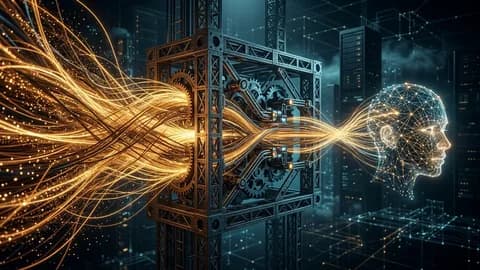
The pitch is quietly huge. Instead of hand-writing bespoke integrations for every microscope, liquid handler, camera, and robotic arm on a lab bench, MHS gives those instruments a common driver layer that any agent can talk to. Setups that normally take weeks or months drop to hours or minutes. Anthropic is sharing an early version with a first cohort of scientific labs and advanced manufacturers, with plans to open-source the standard later.
The Integration Tax MHS Is Removing
Walk into any real lab and you'll see the problem immediately. A bench is assembled from vendors who never planned to interoperate. Every instrument ships its own programming interface — one speaks a proprietary serial protocol, another has a quirky REST endpoint, a third expects a Windows-only SDK. To get two of them talking, a specialist writes a bespoke translator by hand. To get five working together, you've burned weeks.
Even once the plumbing is wired up, there's no common way for the devices to hand state to an agent, or to let one operate them safely. That's the gap MHS attacks. It standardizes the driver — the software layer between a computer and a hardware device — and exposes a small primitive set: read to get state like current temperature, write to set it, plus discovery so devices and agents can find each other across a network without a middleman translator.
What MHS Actually Specifies
MHS works with any device that has a programmable interface. It is deliberately model-agnostic — any agent harness can reach an MHS device through standard protocols like the Model Context Protocol, plus a CLI and code files.
Three ideas carry the design:
- A standardized driver translates between the host and the instrument, replacing one-off translators.
- A knowledge file captures what code alone doesn't encode — the physical weight of a robot arm, say, or which parameters a device measures. Driver tags let a user write that knowledge in natural language, or let an agent interview them about the setup, and the driver compiles it into a reference file listing what a device measures, what can be adjusted, and which safety limits are enforced.
- Safety limits live in the driver, not in the prompt. Instead of hoping an agent "behaves," the device's own driver enforces what it is allowed to do.
That last point is the one worth noticing. Prompt-level safety for physical equipment is unreliable — you don't want a model reasoning its way past a laser interlock. MHS pushes those constraints down to the hardware layer where they're structural, not negotiable.
Here's a rough idea of the primitive a driver exposes:
// Conceptual MHS driver surface (not the real API)
const device = await mhs.connect("liquid-handler-02", { transport: "mcp" });
const temp = await device.read("heater.temperature");   // get state
await device.write("heater.set_temperature", 37.0);     // set state
await device.discover();                                 // find peers on the network
The Numbers From the Preview
Anthropic's partners reported concrete results during the preview:
- Carnegie Mellon hit a finished dose-response curve in eight hours instead of the usual weeks.
- QuEra applied agents to quantum-computing hardware and brought a laser relock success rate from 58% at ~150 seconds to 99.3% across 700 trials — produced as a deterministic script.
- University of Washington — a PhD student in the Baker and Pinglay labs connected six instruments in under a week, including writing the drivers.
- Tetsuwan Scientific paired MHS with its ResearchOS platform for qPCR pollution profiling.
- At Janelia, one microscopy rig went from seven programs launched in a fixed order to a single dashboard click.
Hardware vendors are also building MHS support in: AWS is backing it through Strands Robots, Automata through its LINQ lab-automation platform, Tecan for its Fluent liquid handlers, and Universal Robots for its robotics platform.
The Honest Caveats
MHS is a research preview, not a finished product. Only an application-based cohort has access, and the full spec isn't open-sourced yet — no date, repo, or license announced. The demonstrations lean heavily on Claude, so cross-model claims are design intent rather than measured fact. And Anthropic is explicit that Claude's spatial and physical reasoning has real limits. Genentech researchers, for instance, had to teach Claude that errors caused by foaming in protein samples were physical failures, not software bugs.
MHS also can't help with hardware that lacks a programmable interface at all. Those devices need drivers built into them by their manufacturers first. And the governance questions — who's liable when an agent-operated machine breaks something — are still being written by courts and regulators, not just engineers.
Why This Matters
For a while now, agent frameworks have been unlocking software tools through shared protocols. MHS is the same idea crossing into the physical world: turn instruments into systems an agent can discover, reason about, and operate without a bespoke integration per machine. It won't replace the engineer who understands the bench — Claude's own physical-reasoning gaps guarantee expert oversight stays in the loop. But it changes the economics. If the standard matures and opens up, the bottleneck between "AI agent" and "AI agent that actually does science" just got a lot smaller.
Related
- Agentic AI and Scientific Computing: An OpenAI Field Report — How coding agents are modernizing research software.
- DeepSeek Harness: An Agent Framework Where Everything Is a Plugin — The software-side trend of wrapping frozen cores with plug-in capabilities.
The announcement lives at Anthropic's Model Hardware Standard research preview, and you can apply via modelhardwarestandard.com.
Sources
- Anthropic: Model Hardware Standard research preview
- Anthropic: Model Hardware Standard
// author
Editor & Operator
Mohd Firdaus Abu Bakar (MrDodgerX) is an enterprise geospatial systems engineer in Malaysia and the editor behind hejes.my. He runs the briefing pipeline, curates and edits every draft, verifies each factual claim against primary sources, and presses the publish button — nothing ships without his review. He writes about AI, security and Malaysia's tech scene from a builder's perspective. Professional profile and code: the links below.
// sources //
fact-check verified · 18 SEPT 2026 · hejes-content-fact-check
- Model Hardware Standard research previewAnthropic · accessed 31 AUG 2026
- Model Hardware StandardAnthropic · accessed 31 AUG 2026
related //

AI Agents vs Government Sites: What Logs Show
Autonomous agents made 200,000 requests to a US Department of Education site and threw 13 payloads at Library and Archives Canada. Nothing leaked.

Claude Opus 5.5: Fable-Class Results, Lower Cost
Claude Opus 5.5 ships Fable 5.1-class scores at roughly 40% lower cost than Opus 5, plus always-on thinking and safety rerouting to plan around.
Strands Harness: AWS's Open-Source Agent at 28% Less Cost
AWS's Strands team shipped a batteries-included agent harness that reports 28% lower token cost than Claude Code and Codex at near-equal accuracy.
// join the feed
one fresh insight per week. no spam, ever.
weekly digest. unsubscribe anytime.