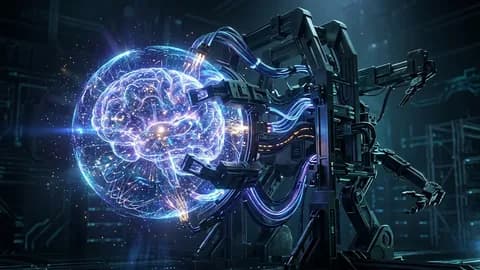
GPT-6 Astra vs Agent Harness: The Real Difference
GPT-6 Astra vs Agent Harness: The Real Difference
Since GPT-6 Astra was announced on September 3, 2026, a lot of the discussion has immediately described it as an "agent".
That framing misses something important.
Astra is a model. An agent is a system.
Sounds simple, but the difference matters.
When we build a coding agent, an automation system, or an AI that can operate a computer, the model is only one component. The system around it determines what the model can actually do.
Tools, memory, orchestration, permissions, state management, error recovery and the environment all matter.
That surrounding system is what we generally call the agent harness.
If you already use OpenCode, OpenClaw, Hermes, Claude Code, or another modern coding agent, you are already using this concept.
So instead of asking whether Astra is "an agent", a better question is:
What happens when a more capable model is placed inside a capable agent harness?
That is the interesting part.
What GPT-6 Astra Actually Is
GPT-6 Astra is, fundamentally, a language model.
The model receives input, processes it and produces output. That output can be text, code, decisions, instructions or — depending on the interface provided by the host system — actions that another system can execute.
The important part is the last one.
A model does not automatically have access to your computer just because it can understand what is happening on a screen.
Give it this instruction:
Fix the CSS bug on line 42 of index.html.
The model can analyse the problem and suggest a change.
But opening index.html, modifying the file, running the application and verifying the result requires additional capabilities.
That is where the harness comes in.
Benchmarks are not the whole story
Astra may show substantial improvements across benchmarks involving reasoning, coding and computer use.
Reported benchmark results (OpenAI's launch table, vendor-stated) include:
- ARC-AGI-3: 99.9% (Provider Adapter harness; 62.7% on the ARC Prize Standard harness)
- OSWorld 2.0: 72.6%
- Terminal-Bench 4.0: 57.9%
- ExploitBench: 100%
- FrontierMath Tier 4: 97.6%
Those numbers are impressive.
But a benchmark score and production agent reliability are not the same thing.
A benchmark tells you how well a model performs under a particular evaluation setup. It does not tell you how the same model behaves when it has to deal with a real filesystem, failed tool calls, network problems, long-running state, permission boundaries, changing application state or human approval. Benchmarks can also be gamed outright — live-search evaluation exists precisely because static tests get cheated.
That distinction is where a lot of the current agent discussion gets blurry.
What an Agent Harness Actually Is
The simplest definition I can give is:
An agent harness is the infrastructure that connects a model to tools, state, workflows and the environment where the work happens.
It is not the model itself.
A harness can provide:
- Tools — terminal, filesystem, browser, APIs, databases
- Memory — context, notes, session state and compaction
- Orchestration — the loop that sends model output to tools and feeds the results back
- Permissions — what the model is allowed to do
- State management — tracking progress across a task
- Error recovery — handling failed commands, unavailable resources and unexpected states
- Human approval — deciding when a person needs to approve an action
Without these layers, the model can still reason about what should happen.
With them, the system can attempt to actually do it.
Model + Harness + Tools + Environment
This is how I prefer to think about an agent architecture:
                    AGENT SYSTEM
                         │
             ┌───────────┴───────────┐
             │                       │
          MODEL                   HARNESS
             │                       │
       reasoning               orchestration
       planning                memory
       generation              permissions
                               state
                               retries
                               context
                                   │
                         ┌─────────┴─────────┐
                         │                   │
                       TOOLS             ENVIRONMENT
                         │                   │
                      terminal               OS
                      filesystem             apps
                      browser               network
                      APIs                  services
                      database
The model provides reasoning and generation capability.
The harness determines how that capability is used.
Tools provide access.
The environment is where the actual work happens.
All four matter.
The Concrete Difference
Here is the distinction in the simplest possible example.
With a model alone:
Astra (the model):

Input:
  "Fix the CSS bug on line 42 of index.html"

Output:
  "Change line 42 from display: none to display: flex."
The model has produced an answer.
An agent system can turn the same request into a workflow:
Agent system:

1. Read index.html
2. Inspect the relevant CSS
3. Ask the model to analyse the problem
4. Modify the file
5. Run the application or test
6. Inspect the result
7. Determine whether the fix worked
8. Make another change if necessary
9. Ask for approval before committing
The important difference is not simply intelligence.
It is capability plus execution.
The Same Model Can Produce Different Agents
This is where the harness becomes interesting.
Imagine we use exactly the same model.
Then we put it into two different harnesses:
                 SAME MODEL
                     │
          ┌──────────┴──────────┐
          │                     │
      Harness A             Harness B
          │                     │
    basic tools             rich tools
    short context           persistent memory
    no retry                retry/recovery
    broad permissions       controlled permissions
          │                     │
       Result A              Result B
The model is identical.
The task is identical.
But the resulting agent can behave very differently.
Harness-Bench (arXiv:2605.27922) shows this clearly: the best-vs-worst harness gap was a 23.8-point spread across 106 tasks (76.2 vs 52.4, averaged over 8 model backends).
That is a significant difference.
It means we cannot evaluate an agent system purely by asking which model is underneath it.
Model capability is only part of agent capability.
What You Already Have
If you use OpenCode, OpenClaw, Hermes or similar coding agents, much of this architecture already exists — and the open-source agent framework landscape is further along than most teams realize.
Conceptually, it looks something like this:
                    YOUR AGENT
                         │
              ┌──────────┴──────────┐
              │                     │
           HARNESS                 MODEL
              │                     │
       ┌──────┼──────┐              │
       │      │      │              │
     Tools  Memory  State           LLM
       │      │      │
   terminal context workflow
   files    notes   retries
   browser  history permissions
   APIs
This is one reason model-agnostic architecture is valuable.
Your application should not need to be redesigned every time a new model appears.
Conceptually:
model = "gpt-6-astra"
can eventually become:
model = "next-generation-model"
while the rest of the system remains largely unchanged.
Of course, different models still have different capabilities, costs, context limits and reliability.
Model-agnostic does not mean model-independent in terms of performance.
It means your architecture does not unnecessarily depend on one model provider or one model generation.
Where Astra Actually Adds Value
This is where Astra becomes genuinely interesting.
One of the important capabilities associated with the new generation of models is computer use.
Instead of operating purely through text, a model can work with visual information such as screenshots and produce actions that the host system can translate into GUI operations.
That changes the kinds of workflows a harness can support. Astra's computer-use agent is the concrete case study — including the critical gate it ships behind.
For example:
- Open an application
- Inspect what is visible
- Identify UI elements
- Read information from the screen
- Click or type through the provided computer-use interface
- Observe the new state
- Decide what to do next
The important phrase here is:
through the provided interface.
The model itself does not suddenly gain unrestricted access to your keyboard, filesystem or desktop.
The host system still has to provide the mechanism that turns the model's output into actual actions.
That is why computer use does not eliminate the harness.
It makes the harness more interesting.
Computer Use Changes the Loop
Traditional automation often looks like this:
Model
  │
  ▼
API
  │
  ▼
Structured data
Computer-use workflows can look more like this:
Model
  │
  ▼
Screenshot / visual state
  │
  ▼
Decision
  │
  ▼
Computer-use action
  │
  ▼
Application
  │
  ▼
New screenshot
  │
  └──────────────► Model
That loop allows an agent to interact with applications that may not expose a useful API.
It can potentially be used for desktop software, visual testing, GUI workflows and other tasks that previously required a human to operate a mouse and keyboard.
The OSWorld benchmark is interesting for exactly this reason. It evaluates models in desktop environments and measures whether they can complete tasks that require GUI interaction.
But again:
model capability is not the same thing as system reliability.
Why This Does Not Replace Your Harness
This is the part that gets lost in the hype.
A more capable model does not make the harness irrelevant.
In many cases, it makes the harness more important.
Consider a simple terminal example:
$ npm test

Error: ECONNREFUSED
The model needs to understand that the command failed.
But then what?
Should the system retry?
Should it inspect the service?
Should it check whether the database is running?
Should it roll back the previous change?
Should it ask the user?
That behaviour belongs to the larger agent system.
A typical loop might look like this:
User
 │
 ▼
Model
 │
 ▼
Tool call
 │
 ▼
Terminal
 │
 ├── Success ────────► Model
 │
 └── Error
       │
       ▼
   Error handler
       │
       ├── Retry
       ├── Diagnose
       ├── Rollback
       └── Ask human
The model is part of the loop.
It is not the entire loop.
The Difference Between a Demo and a Production Agent
This is also why I would not judge an agent purely by what it can do in a controlled demo.
A demo can show:
Open application
       ↓
Click button
       ↓
Enter text
       ↓
Task completed
A production agent has to survive:
Open application
       ↓
Application is slow
       ↓
UI changed
       ↓
Expected button is missing
       ↓
Tool call fails
       ↓
Context is getting large
       ↓
Network request times out
       ↓
Agent retries
       ↓
Permission is required
       ↓
Human approves
       ↓
Agent continues
       ↓
Verify result
That is where the harness matters most.
The difference between a convincing demo and a dependable agent is often everything surrounding the model.
The Model and Harness Will Keep Evolving Together
The relationship between models and harnesses is not static.
Capabilities that once required elaborate orchestration can eventually become native model capabilities.
The cycle can look roughly like this:
New capability
      │
      ▼
Harness provides workaround
      │
      ▼
Model is trained around the workflow
      │
      ▼
Capability becomes more native
      │
      ▼
Some scaffolding can be reduced
      │
      ▼
Harness moves to the next problem
This does not mean harnesses will disappear.
It means the boundary between the model and the surrounding system will keep moving.
Some responsibilities may gradually move into the model.
Others will remain outside it.
Permissions, identity, security, trust, observability, auditability and human approval are good examples of things that still belong to the system around the model.
Those are not problems that disappear simply because the model gets smarter.
What Actually Matters for Your Stack
If you are building or choosing an agent system today, I would focus on a few things.
1. Build model-agnostic infrastructure
Do not hard-code your entire architecture around one model.
Tools, memory, permissions and orchestration should have clean interfaces that allow different models to be used.
2. Separate the model from the tools
Keep the boundaries clear:
Model
  │
  ▼
Tool selection
  │
  ▼
Tool execution
  │
  ▼
Result
  │
  ▼
Model
This makes the system easier to test, debug and replace.
3. Treat permissions as part of the architecture
Do not give an agent unrestricted access just because the model is capable.
Think in terms of explicit capabilities:
Read
Write
Execute
Network
Delete
Deploy
Different actions can have different approval requirements.
A more capable model does not remove the need for permission boundaries. Permissions are a security boundary, not a courtesy — see the AI agent threat model.
4. Test the harness independently
If agent performance changes after a model upgrade, do not immediately blame the model.
Test:
Same model
Different harness
and:
Same harness
Different model
That gives you a much better idea of where the performance change actually came from. Adaptive training environments take the same idea further: vary the world, not just the model.
5. Use the right model for the right task
Not every task requires the most expensive frontier model.
A local model may be perfectly adequate for formatting, simple code generation or routine transformations.
A stronger model may be worth the cost for complex reasoning, difficult debugging or computer-use workflows.
The goal is not to use the biggest model everywhere.
The goal is to use the right model for the job.
So, Astra or the Harness?
The answer is neither.
You need both.
The model provides intelligence.
The harness provides execution and control.
Tools provide access.
The environment provides the place where work happens — from containers to real hardware that agents can operate.
Permissions determine what the agent is actually allowed to do.
A useful mental model is:
             ┌───────────────────────┐
             │      AGENT SYSTEM     │
             │                       │
             │       ┌───────┐       │
             │       │ MODEL │       │
             │       └───┬───┘       │
             │           │           │
             │         HARNESS       │
             │           │           │
             │    ┌──────┼──────┐    │
             │    │      │      │    │
             │  Tools  Memory  State │
             │    │      │      │    │
             │    └──────┼──────┘    │
             │           │           │
             │       Environment     │
             └───────────────────────┘
This is why I think the current obsession with model releases misses part of the picture.
A stronger model can raise the ceiling.
A better harness can determine how much of that ceiling you can actually use.
FAQ
What is an AI agent harness?
The infrastructure that connects a model to tools, state, workflows, and the environment where work happens — terminal, files, browser, APIs, memory, permissions, retries. The model provides intelligence; the harness provides execution and control.
What is the difference between an AI model and an agent harness?
The model decides; the harness acts. Swap the model and you change capability; swap the harness and you change what the agent can touch, remember, and break. The same model inside two different harnesses is effectively two different agents.
Why do AI agents need a harness?
Because a bare model cannot run commands, remember state across steps, enforce permissions, or recover from failure. The harness supplies tools, memory, orchestration, observability, and human-approval gates — everything that turns a completion into a result.
What does an agent harness control?
Tool selection and execution, context and memory management, sandboxing, network access, permission boundaries, retries, evaluation, and audit logging. Critically, it should also control what the model is not allowed to do.
Are agent harnesses a security boundary?
They should be, but only by design. A harness that enforces identity, least-privilege tools, sandboxing, and audit logging outside the model is a real boundary. One that merely loops model calls is not — see the AI agent threat model.
The Bottom Line
GPT-6 Astra may be significantly more capable than the models that came before it. Improvements in reasoning, coding and computer use can change what an agent system is capable of doing.
But Astra is not the whole agent.
It is one component.
A useful agent system needs more:
model + harness + tools + environment + permissions + state.
If you are already running OpenCode, OpenClaw, Hermes or a similar agent framework, you already have much of the infrastructure required to take advantage of a stronger model.
So the more useful question is not:
"Should I switch to Astra?"
It is:
"What happens when I put a more capable model inside the harness I already have?"
That is a much better question.
Because in the end, the model determines what is possible.
The harness determines how much of that possibility becomes actual work.
Sources
// author
Editor & Operator
Mohd Firdaus Abu Bakar (MrDodgerX) is an enterprise geospatial systems engineer in Malaysia and the editor behind hejes.my. He runs the briefing pipeline, curates and edits every draft, verifies each factual claim against primary sources, and presses the publish button — nothing ships without his review. He writes about AI, security and Malaysia's tech scene from a builder's perspective. Professional profile and code: the links below.
// sources //
fact-check verified · 09 SEPT 2026 · hejes-content-fact-check
- GPT-6 Astra: A new generation of intelligenceOpenAI · accessed 09 SEPT 2026
- OpenAI's GPT-6 Astra on ARC-AGI-3ARC Prize · accessed 09 SEPT 2026
- Harness-Bench: Measuring Harness Effects across Models in Realistic Agent WorkflowsarXiv · accessed 09 SEPT 2026
related //

Claude Opus 5.5: Fable-Class Results, Lower Cost
Claude Opus 5.5 ships Fable 5.1-class scores at roughly 40% lower cost than Opus 5, plus always-on thinking and safety rerouting to plan around.

Strands Harness: AWS's Open-Source Agent at 28% Less Cost
AWS's Strands team shipped a batteries-included agent harness that reports 28% lower token cost than Claude Code and Codex at near-equal accuracy.

Claude Fable 5.1: Smarter Coding, 75% Cheaper Cache Reads
Claude Fable 5.1 doubles down on long agentic work — 52.6% on Terminal-Bench-Science — and cache reads drop 75%. Mythos 5.1: same model, looser guardrails.
// join the feed
one fresh insight per week. no spam, ever.
weekly digest. unsubscribe anytime.